Engineering tomorrow: System Ceramics’ innovative R&D approach
In today’s ceramic industry, innovation is no longer a linear process, but a continuous balance between performance, integration and adaptability. As production systems evolve, manufacturers are increasingly required to manage complex and interconnected technologies while maintaining efficiency and control.
In this context, Research & Development plays a strategic role in shaping not only new solutions, but the way entire production ecosystems are designed and managed. As Andrea Annovi, Engineering & R&D Director at System Ceramics, explains, “the focus is shifting toward more integrated and automated systems, where multiple technologies operate in a fully synchronized environment”.
Shaping production through rising expectations
Customer expectations are evolving rapidly within the ceramic sector and manufacturers are looking for machines capable of delivering higher performance and reliability, even when processing more sophisticated products. At the same time, expectations are rising in terms of service and technical support, with a growing need for responsive and effective assistance.
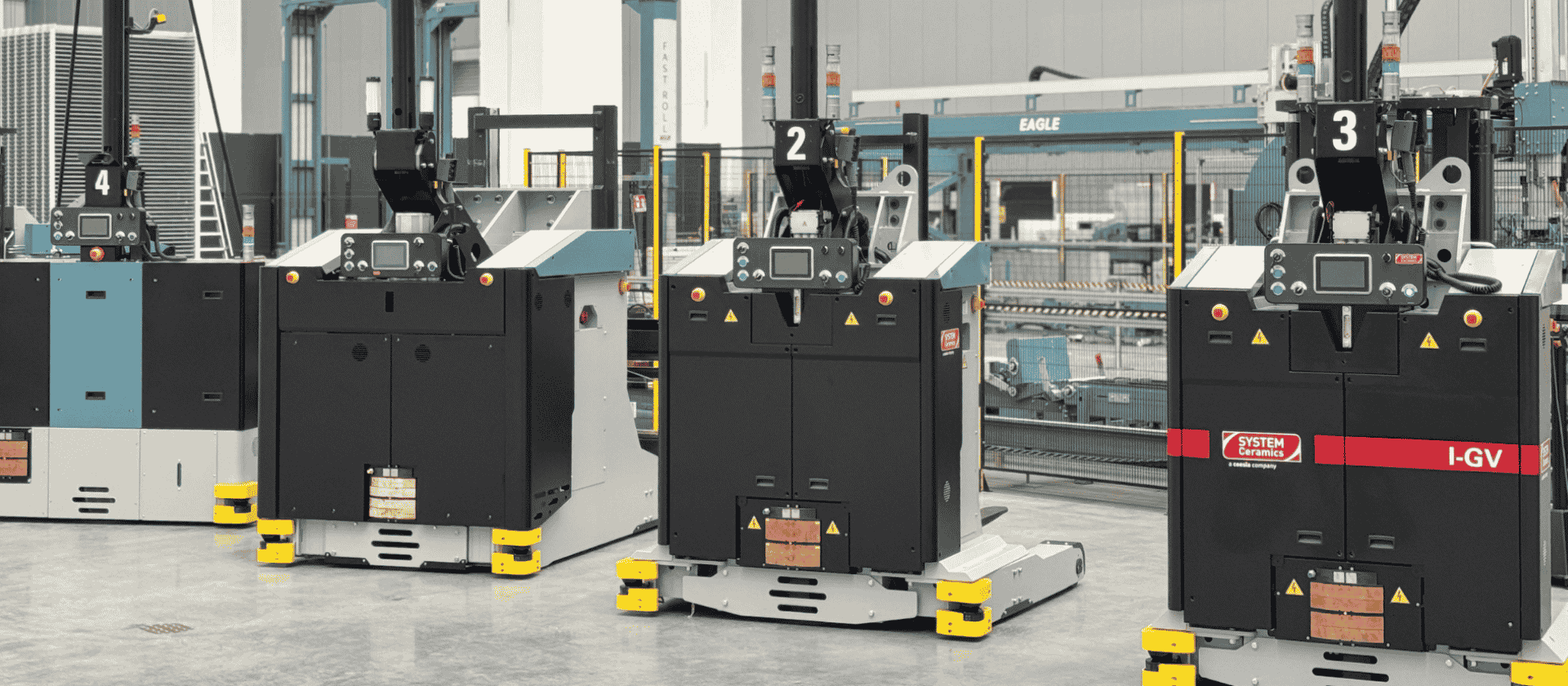
It is precisely in response to these evolving demands that R&D priorities are shifting. As Annovi explains, “the most significant shift has been towards a higher level of automation across production lines”, particularly in the decoration area, where multiple interconnected applications now contribute directly to the value of the finished product.
This evolution, however, introduces a new layer of complexity. The challenge today lies in managing a fully integrated ecosystem of machines operating in a synchronized way. At the same time, this level of technological advancement must remain accessible, ensuring that system complexity is aligned with the skills and resources available within production environments.
Balancing a challenging context
Alongside these technological and organizational shifts, the broader market context continues to play a significant role in shaping production strategies. Energy costs remain a key factor, with gas prices in particular continuing to impact manufacturers’ operational decisions.
In parallel, evolving market preferences are also influencing production requirements. The renewed demand for smaller formats in certain regions, for example, is driving the need for more specialized and flexible packaging solutions. This trend is opening new opportunities “for tailor-made packaging lines, an area in which System Ceramics has long-standing expertise”, Annovi states.
R&D strategy and investment governance
System Ceramics’ R&D strategy is built on a dual approach: strengthening its core expertise while simultaneously exploring new application areas. On one side, the company continues to invest in the evolution of its established technologies, particularly in decoration and packaging solutions, where it holds a leading position. On the other hand, it “is actively developing new applications that are expected to become future technological benchmarks for the industry”, Annovi explains.
At the same time, diversification beyond the traditional ceramic sector is playing an increasingly important role. As Annovi highlights, this includes areas such as flat glass decoration, tableware and e-commerce packaging, where System Ceramics is investing, expanding both its technological capabilities and market reach.
Behind these strategic choices lies a structured decision-making process. Investment priorities are not defined in isolation, but through a shared evaluation involving multiple company functions.
People and skills at the core of innovation
Behind every technological advancement, there is a strong human component. At System Ceramics, R&D involves a wide network of professionals working across different functions. Today, around 140 people are directly involved in R&D projects, supported by additional specialists dedicated to areas such as machine safety, patents and technical documentation.
While mechanical engineering remains the foundation of industrial design, the role of software has become increasingly central. As Annovi explains, software engineers now play a decisive role, “being ultimately responsible for completing the commissioning phase and determining a significant share of the machine’s overall efficiency and usability”.
Furthermore, “the interconnection of all machines, both with company ERP, MES systems and with remote assistance platforms, combined with the entry into force of new European regulations, is giving cybersecurity a role of central importance within industrial technology development”, Annovi highlights.
Technology & future perspectives
Artificial intelligence is one of the most discussed trends and is already widely used in day-to-day operations; its role will continue to expand. As Annovi notes, understanding how to leverage these technologies is becoming essential.
Alongside AI, robotics is accelerating industrial evolution, increasing demand for specific electronic components and reshaping supply chains and industrial ecosystems—driving continuous adaptation across manufacturing, from technology development to operational planning.
To discover more about System Ceramics’ R&D vision and solutions get in touch with our team.