MOMA and I-GV: a success story of smart logistics and strong partnerships
In Finale Emilia, a small industrial hub in Italy’s ceramic district, Ceramiche MOMA has spent the last 25 years refining a clear and specialized vision. Focused exclusively on fast-fired double-firing wall tiles, MOMA is one of the few European manufacturers fully dedicated to this product category. From design to production flexibility, the company has long pursued a precise objective: to innovate with intent.
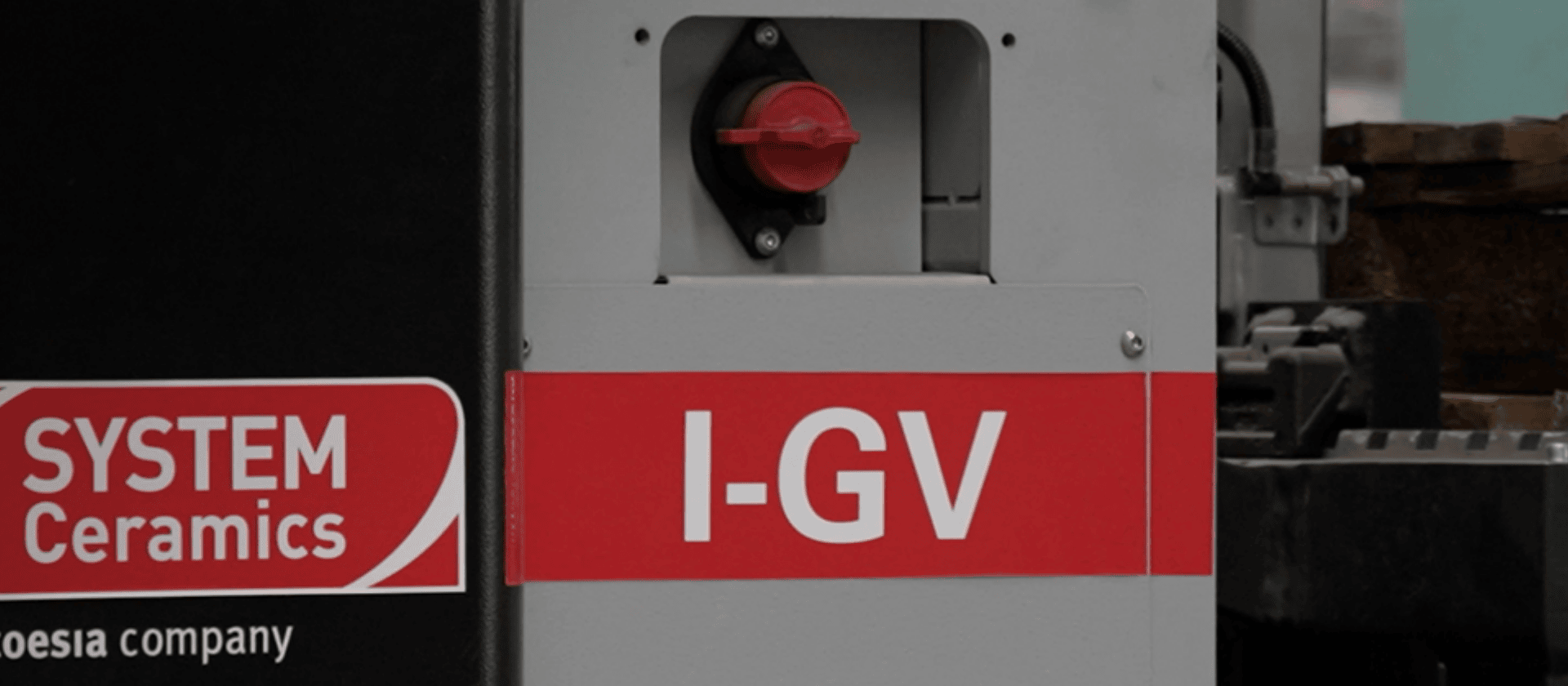
Between the end of 2024 and the beginning of 2025, MOMA carried out a major renovation of one of its main production lines. Alongside this investment came a strategic decision: to adopt I-GV, the proprietary intelligent guided vehicle system developed by System Ceramics.
A ceramic company with a clear vision
MOMA's approach to production is built on constant innovation in design and strong market positioning. Serving primarily customers in Italy and across Europe, the company has structured its operations around the specific needs of the wall tile segment, especially in those markets where this product has cultural and aesthetic relevance.
One of the company’s main challenges today is flexibility. As product variety increases, so does the need for agile and responsive systems that can support quick changeovers. To stay competitive, MOMA is investing not only in equipment but also in the digitalization and informatization of all departments, while improving the overall production environment.
A new phase of growth calls for smarter logistics
As MOMA prepared to revamp one of its main lines, the search began for a logistics solution that could match the company’s renewed ambition. The decision to introduce System Ceramics’ I-GV emerged naturally from a long-standing collaboration that had already brought digital printers and four sorting lines to the plant.
“When we heard that System Ceramics was launching its own I-GV product, we seriously considered the option,” a MOMA representative explains. “System has always provided us with reliable support, and that made us confident in moving forward.”
What further reinforced the decision was the possibility to work with a single supplier for both sorting and logistics, which promised easier integration and long-term continuity. The technical advantages were also clear: robustness, customization, and a deep understanding of ceramic industry needs.
Choosing I-GV: trust, timing and technology
MOMA’s adoption of I-GV was a strategic move toward unified plant management. Four I-GV units were selected, along with the full navigation and traffic management system developed and controlled by System Ceramics.
MOMA had the possibility to be one of the first companies to install I-GV, and the implementation process ran just smoothly.
“We anticipated some delays and challenges,” they note, “but except for a few minor issues — which, let’s be honest, are always part of ceramics — the schedule was respected and the commissioning went as planned.”
A crucial factor was the synergy between teams: since the beginning the collaboration was fluid and constructive, laying the groundwork for a reliable and scalable system.
Working side by side for lasting impact
The true value of the project became clear after the initial installation. I-GV integrated seamlessly into MOMA’s workflow, enabling smarter and safer logistics in the day-to-day management of materials.
One of the key benefits was the ability to handle different types of Work Load Units (WLUs), such as pallets and boxes, thanks to the system’s modular and configurable structure.
Moreover, I-GV comes with 24-hour technical support, ensuring immediate and competent assistance whenever needed, a crucial aspect in high-throughput production environments.
Moma remains committed to continuing its collaboration with System Ceramics and plans to rely on its solutions in the future. With a strong focus on innovation, Moma places trust in the technologies and approaches offered by System Ceramics across various stages of production.
I-GV in action: technology designed around real needs
Unlike standard AGVs on the market, I-GV is tailored to the realities of ceramic manufacturing. It offers several features that combine to create a high-performance, low-impact logistics system.
The vehicles are powered by lithium batteries, which bring significant advantages:
- Fast charging times, just one hour compared to the eight hours required by traditional lead-acid batteries
- Extended operation, up to eight hours per cycle
- No gas emissions during charging, eliminating the need for ventilation systems in charging areas
- Greater durability and lower maintenance needs, leading to lower operational costs and fewer interruptions
Safe, sustainable, and future-ready by design
In terms of safety, I-GV is equipped with certified perimeter sensors and 3D cameras that detect and avoid obstacles in real time. The system also includes an encoder that ensures consistent speed regulation and full compliance with current ISO safety standards, which System Ceramics constantly monitors and updates.
Central to the system’s efficiency is the Next-Generation System Manager, a traffic management software co-developed with Kollmorgen, a global benchmark in motion control. By applying AI-based algorithms, the software optimizes order flows, prevents deadlocks, and improves responsiveness across the entire internal transport network.
This level of integration ensures that I-GV is not just efficient, but future-ready, a critical asset in an industry where agility and compliance evolve continuously.
A vision of partnership and innovation
Reflecting on the project, MOMA expresses a clear sense of satisfaction:
“If something can be called future-ready today, it’s because it comes from a company with experience and vision. We believe System Ceramics has both.”
For MOMA, the decision to adopt I-GV fits into a larger narrative of growth, investment, and modernization. It’s not just about transporting loads. It’s about creating a smart, coordinated system where machines, software, and people work together toward a common goal.
What the MOMA experience tells us
The collaboration between MOMA and System Ceramics is a textbook example of how technology and trust can converge into real-world results. I-GV has improved internal logistics, enhanced safety standards, and reduced environmental impact, but most importantly, it has strengthened MOMA’s ability to respond to market demands with confidence.
For any company exploring automation in logistics, I-GV offers not just performance, but vision, adaptability, and partnership.
Discover how I-GV by System Ceramics can support your internal logistics strategy and download our I-GV brochure from our website.